
Weather
WA Weather
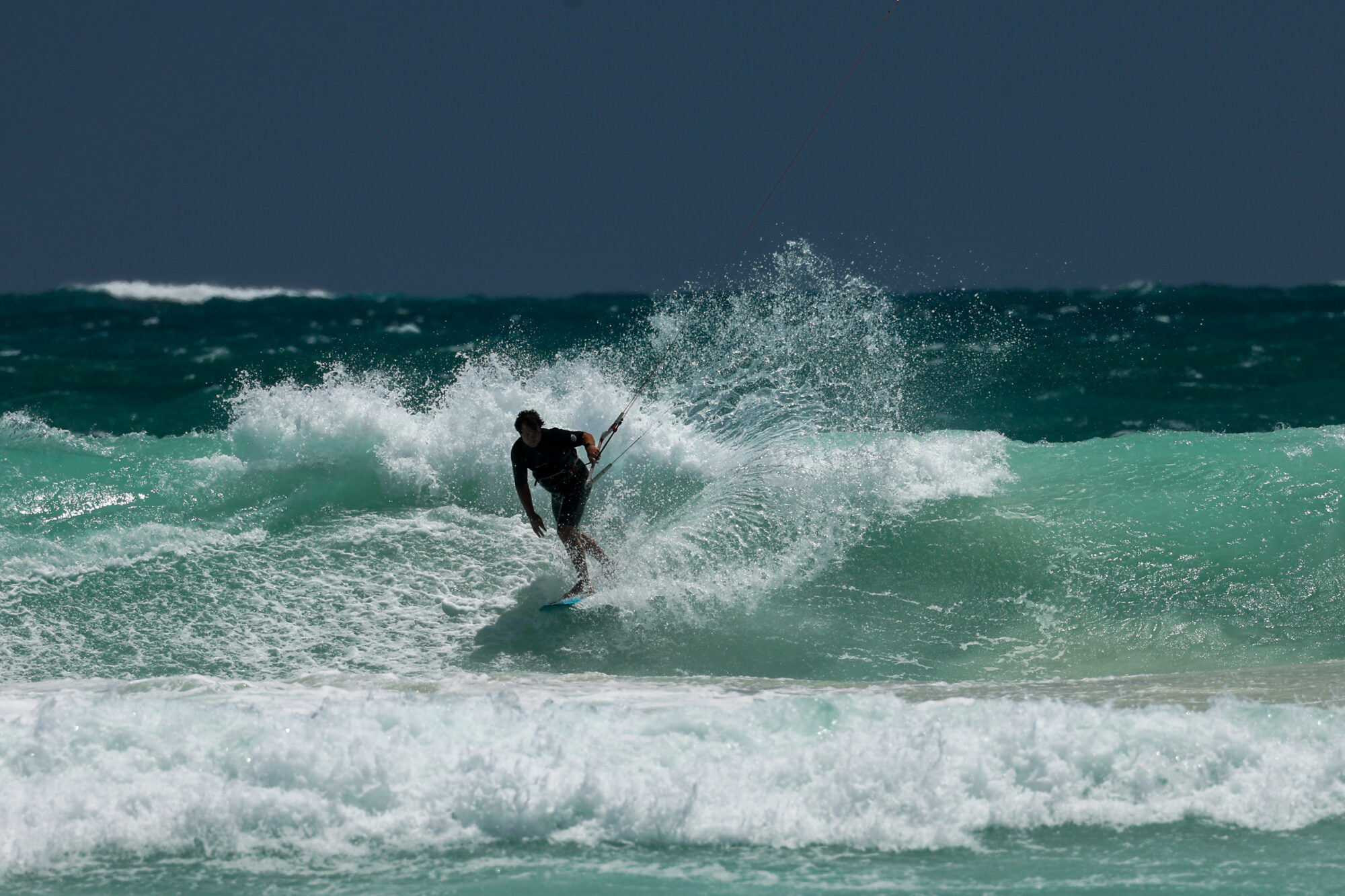
The kiteboarding and wingfoiling season in Western Australia typically runs from late October to early March (Perth summer), when regular south-westerly sea breezes of 15–25 knots can be expected most afternoons — a wind pattern better known as the “Fremantle Doctor.”
During winter (April–September), conditions can be extremely hazardous due to frontal winds, and riding is only recommended for experienced riders. Air temperatures range from 20°C–40°C in summer, and sea temperatures from 17°C–22°C.
These figures are based on the Perth Metro region and should be used as a rough guide only. For a more detailed climatic overview, visit the BOM website. For real-time wind readings at various locations, visit the Seabreeze website.
 For Beginners
Steady wind and flat water — ideally between 17 and 24 knots — is best for learning and building confidence, for both kiteboarding and wingfoiling.
At coastal beaches, the ideal wind direction is cross-shore or cross-onshore. This allows you to ride out and back to the same spot; even if you drift downwind while learning (which is inevitable), you’ll still come back to shore and be able to walk back to your starting point. The Fremantle Doctor, our predominant summer sea breeze, is the best example of this — typically blowing SSW to SW.
A direct onshore wind (a westerly) will blow you straight back onto the beach. This is very challenging to ride in unless you’re confident getting upwind, and it often brings shore break and waves that make getting out even harder. Keep in mind that any equipment issues or crashes in these conditions can mean a hard landing on the beach.
Offshore winds are bad news for riders at most WA coastal beaches. Any wind from an easterly, south-easterly, or north-easterly direction is inadvisable for kiteboarding or wingfoiling — if the wind drops, or you lose your board or wing, equipment problems could leave you blown out into deep water.
Kiteboarding WA strongly advises against riding in offshore wind conditions.
If you’re planning a trip to the coast, always check the tide. Many WA beaches are fringed by reefs that expose rocks at low tide, while others have shallow sandbars that can create hazardous conditions.
If you’re ever unsure about conditions — remember, if in doubt, don’t go out!
